

F. A. P. Barnard, Slavery, and the University of Mississippi
Files
Description
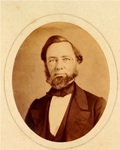
Frederick Augustus Porter Barnard served as a professor at the University of Mississippi and then as its president, or chancellor, from 1856 to 1860. Being northern-born and educated, Barnard grew up and went to school in places where slavery had been ended legally long before the Civil War, though racial tensions and violence against Black people still existed in these areas. He arrived in the South in the 1840s, having only ever lived in "free" states, and entered the slavery-centric plantocracy. Due to the fact he had a foot in both camps, with his northern "free" state background contrasting with his southern slave-owning career, Barnard had a complicated relationship with the "slavery question."
Barnard's own views on slavery were put on trial when he decided to punish a white student for raping and brutally beating one of the enslaved women he owned, Jane, in 1859. During this time, however, it was not legal to rely on the testimony of an enslaved person since they did not count as citizens, but as property. H.R. Branham, a physician and Board of Trustees Member at the University of Mississippi, took this opportunity to accuse Barnard of being "unsound on the slavery question," in order to threaten his credibility and possibly push him out of the university completely. As a result of this accusation, Barnard faced heavy criticism from his peers and his career in Oxford was jeopardized. Barnard won out in the end, earning the favor of the majority of the Board of Trustees after declaring his allegiance to the South and slavery in no uncertain terms. But his stay in Oxford came to an end with the outbreak of the Civil War, when he left both his position and the state for good. Thereafter, Barnard went on to become the longest-serving president of Columbia College, now University, and Barnard College was subsequently founded and named in his honor after his death. Barnard has an enormous reputation in nineteenth-century academia and also occupies an important place in the history of the University of Mississippi.
By studying Barnard in this chronological and geographic-based format, we can better understand what the "slavery" question meant in and outside of the slave-holding South. Since Barnard is a figure who spent a great deal of time as a northerner in the South, he is a good example of how complicated white racial attitudes in nineteenth-century America really were. The North was not an abolitionist Utopia, exemplified by Barnard's easy transition into slave-holding. Barnard was also embroiled in one of the most scandalous conflicts at the University of Mississippi since its inception, so it's important to know his background and life details to better understand the infamous Branham Affair and all its nuances.
Publication Date
6-2-2021
Relational Format
map
Recommended Citation
Whittington, Reagan, "F. A. P. Barnard, Slavery, and the University of Mississippi" (2021). Digital and Public History Student Projects. 44.
https://egrove.olemiss.edu/dighist/44
Accessibility Status
Searchable text
Comments
To open this project in a new tab, click this link