

Neuroscience Research Showcase
Files
Download Full Text (1.4 MB)
Description
(All authors are affiliated with the University of Mississippi)
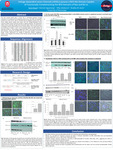
Abstract: The Bcl-2 protein family plays a critical role in controlling apoptosis through interactions of multidomain pro-apoptotic proteins (e.g., Bax, Bak), anti-apoptotic proteins (e.g., Bcl-2, Bcl-xL, Mcl-1), and BH3-only pro-apoptotic proteins (e.g., Bid, Puma, Noxa). Recent studies have shown that the Voltage-Dependent Anion Channels (VDAC) interact with Bax and Bak to regulate apoptosis. We hypothesize VDACs interact with Bax through their N-terminal region, which we discovered is homologous with the BH3 domains of Bcl-2 family proteins. The results show that the N-terminus of VDACs 1 and 2 can functionally replace the BH3 domains of both Bax and Bcl-xL. These findings suggest that VDACs 1 and 2 possess functional BH3 domains, raising the possibility that they are novel members of the Bcl-2 family. Further experiments are needed to determine whether endogenous VDACs 1 and 2 regulate the activities of Bcl-2 family members through their BH3 like N-termini.
Publication Date
4-15-2025
Relational Format
poster
Disciplines
Neurosciences
Recommended Citation
Nepal, Saroj; Agyemang, Clement; Jekabsons, Mika; and Jones, Bradley W., "Voltage-dependent anion Channels (VDACs) possess a BH3-like Domain Capable of Functionally Complementing the BH3 Domains of Bax and Bcl-xL" (2025). Neuroscience Research Showcase. 28.
https://egrove.olemiss.edu/neuro_showcase/28
Accessibility Status
Searchable text