

Files
Download Full Text (672 KB)
Description
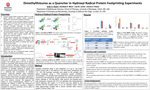
Hydroxyl radical protein footprinting (HRPF) is a mass spectrometry-based technique for measuring the surface of a protein or protein complex. This method relies on the use of hydroxyl radicals to irreversibly label exposed amino acid side chains in proteins. Although catalase is commonly employed to quench secondary oxidation by catalytic conversion of hydrogen peroxide to oxygen and water, it possesses certain drawbacks. The inclusion of a relatively high concentration of catalase produces interfering peptides after proteolytic digestion, thereby limiting the method's sensitivity due to dynamic range issues and signal suppression. These drawbacks are most noticeable when dealing with more complex mixtures. We assessed the viability of using dimethylthiourea (DMTU) as a substitute for catalase in HRPF. We measured its effectiveness in quenching secondary oxidation, evaluated its impact on sensitivity, and its ability to handle complex mixtures.
Publication Date
3-10-2025
Relational Format
poster
Disciplines
Pharmacy and Pharmaceutical Sciences
Recommended Citation
Shami, Anter A.; Misra, Sandeep K.; Jones, Lisa M.; and Sharp, Joshua S., "Dimethylthiourea as a Quencher in Hydroxyl Radical Protein Footprinting Experiments" (2025). Annual Poster Session 2024-2025. 2.
https://egrove.olemiss.edu/pharm_annual_posters_2025/2
Accessibility Status
Searchable text