

Files
Download Full Text (661 KB)
Description
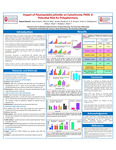
Pausinystalia johimbe, a tree native to West Africa, contains yohimbine as its primary active compound which was traditionally used as an aphrodisiac, has gained attention for its diverse pharmacological effects such as weight loss promotion, athletic performance enhancement, mood improvement, potential anxiety reduction and cognitive function enhancement. Recent studies have revealed that the primary mechanism of action of yohimbine is as an α2-adrenergic receptor antagonist, affecting fat metabolism, vasodilation, and sympathetic nervous system activity. PXR and AhR are xenobiotic receptors that regulate the expression of drugmetabolizing Cytochrome P450 enzymes (CYPs) and transporters like Pglycoprotien (P-gp). Concomitant consumption of phytochemicals like yohimbine along with pharmaceutical drugs may act as agonists or antagonists for PXR and AhR, potentially leading to dysregulation of CYP enzymes and transporters. This could increase the risk of herb-drug interactions (HDIs), especially in the context of polypharmacy. Further research is needed to fully elucidate the impact of P. johimbe and yohimbine on CYP enzymes and their potential risks in polypharmacy scenarios.
Publication Date
3-4-2025
Relational Format
poster
Disciplines
Pharmacy and Pharmaceutical Sciences
Recommended Citation
Kotwal, Pankul; Husain, Islam; Dale, Olivia R.; Annam, Suresh Chandra V. A. R.; Chittiboyina, Amar G.; Khan, Ikhlas A.; and Khan, Shabana I., "Impact of Pausinystalia johimbe on Cytochrome P450: A Potential Risk for Polypharmacy" (2025). Annual Poster Session 2024-2025. 8.
https://egrove.olemiss.edu/pharm_annual_posters_2025/8
Accessibility Status
Searchable text