

Each semester, the Center for Excellence in Teaching and Learning sponsors a Graduate Reading Group. The group meets three to four times over the course of the semester to discuss the chosen book. We'll provide the book and the lunch; you come with thoughts and questions.
Note: CETL reading groups exist to foster dialogue among UM instructors about important issues in higher education teaching and learning. The views expressed in the selected books are those of the authors alone and do not necessarily represent the views of CETL staff.
-
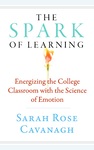
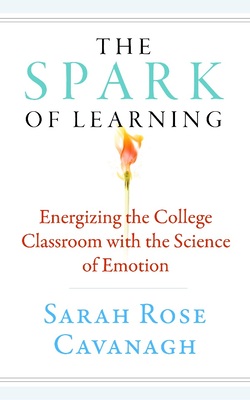
Spring 2026. The Spark of Learning: Energizing the College Classroom with the Science of Emotion
Sarah Rose Cavanagh
Graduate Reading Group
- Date: Fridays, February 20, March 20, and April 10, 2026
- Time: 12:00-1:00 pm
- Location: Hill Hall 117
- Facilitators: Brian Wesley Harrington, Sarah Ligon, and Amitesh Singh
This semester, the Graduate Reading Group will tackle the book The Spark of Learning: Energizing the College Classroom with the Science of Emotion, by Sarah Rose Cavanagh. Registered graduate students will receive a paperback copy of the book. Join us to learn more about college teaching and connect with fellow graduate TAs, instructors, and aspiring educators.
Historically, we have constructed our classrooms with the assumption that learning is a dry, staid affair best conducted in quiet tones and ruled by an unemotional consideration of the facts. The field of education, however, is beginning to awaken to the potential power of emotions to fuel learning, informed by contributions from psychology and neuroscience. In friendly, readable prose, Sarah Rose Cavanagh argues that if you as an educator want to capture your students' attention, harness their working memory, bolster their long-term retention, and enhance their motivation, you should consider the emotional impact of your teaching style and course design. To make this argument, she brings to bear a wide range of evidence from the study of education, psychology, and neuroscience, and she provides practical examples of successful classroom activities from a variety of disciplines in secondary and higher education.
-
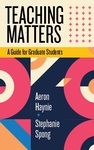
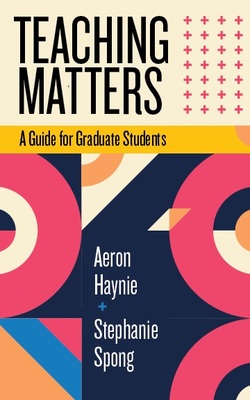
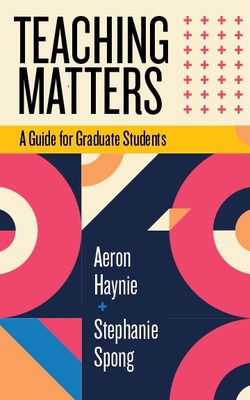
Fall 2025. Teaching Matters: A Guide for Graduate Students
Aeron Haynie and Stephanie Spong
This semester, the Graduate Reading Group will tackle the book Teaching Matters: A Guide for Graduate Students, by Aeron Haynie and Stephanie Spong. Registered graduate students will receive a paperback copy of the book. Join us to learn more about college teaching and connect with fellow graduate TAs, instructors, and aspiring educators. In Teaching Matters: A Guide for Graduate Students, Aeron Haynie and Stephanie Spong argue that learning to teach well is an essential part of a graduate student's professional development—and they offer a guidebook that will help graduate students do just that. The book is informed by research but also grounded in the practical experiences of graduate TAs and instructors. No matter what your discipline or where you're at in your teaching journey, the book will provide the information you need to create meaningful learning experiences for the students in your classes. The Fall 2025 Graduate Reading Group will meet at Hill Hall 117 on the following Fridays from 12:00-1:00 pm: September 19, October 17, November 7. Pizza will be provided for lunch.
-
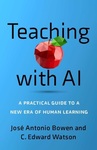
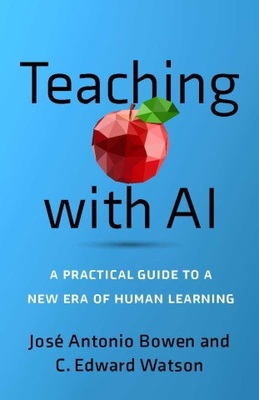
Spring 2025: Teaching with AI: A Practical Guide to a New Era of Human Learning
José Antonio Bowen and C. Edward Watson
Dates and times: Fridays, February 14, March 7, and April 4, 12:00-1:00 pm Location: Hill Hall 117 Facilitators: Emily Pitts Donahoe, Amitesh Singh, and Winshen Liu This semester, the Graduate Reading Group will tackle the book Teaching with AI: A Practical Guide to a New Era of Human Learning by José Antonio Bowen and C. Edward Watson. Registered graduate students will receive a paperback copy of the book. Lunch will be provided for registered participants. Artificial Intelligence (AI) is revolutionizing the way we learn, work, and think. Its integration into classrooms and workplaces is already underway, impacting and challenging ideas about creativity, authorship, and education. In this groundbreaking and practical guide, teachers will discover how to harness and manage AI as a powerful teaching tool. José Antonio Bowen and C. Edward Watson present emerging and powerful research on the seismic changes AI is already creating in schools and the workplace, providing invaluable insights into what AI can accomplish in the classroom and beyond.
-
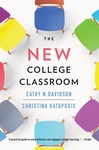
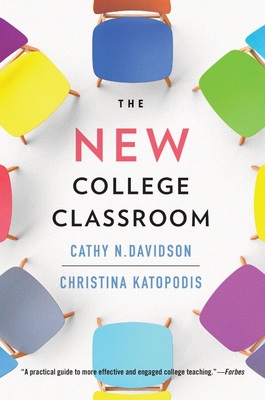
Fall 2024. The New College Classroom
Cathy N. Davidson and Christina Katopodis
Dates and times: Fridays, 12:00-1:00 pm, September 20, October 18, and November 15 Location: Hill Hall 117 Presenters: Emily Pitts Donahoe and Amitesh Singh This year, the Graduate Reading Group will tackle the book The New College Classroom by Cathy N. Davidson and Christina Katopodis. Registered graduate students will receive a paperback copy of the book, and pizza will be provided for lunch. Join us to learn more about college teaching and connect with fellow graduate TAs, instructors, and aspiring educators. The New College Classroom helps instructors in all disciplines create an environment that is truly conducive to learning. Cathy Davidson and Christina Katopodis, two of the world’s foremost innovators in higher education, translate cutting-edge research in learning science and pedagogy into ready-to-use strategies to incorporate into any course. These empirically driven, classroom-tested techniques of active learning―from the participatory syllabus and ungrading to grab-and-go activities for every day of the term―have achieved impressive results at community colleges and research universities, on campus, online, and in hybrid settings. Extensive evidence shows that active learning tools are more effective than conventional methods of instruction. Davidson and Katopodis provide detailed case studies of educators successfully applying active learning techniques in their courses every day, ensuring that their students are better prepared for the world after college.
-
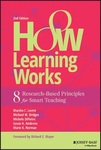
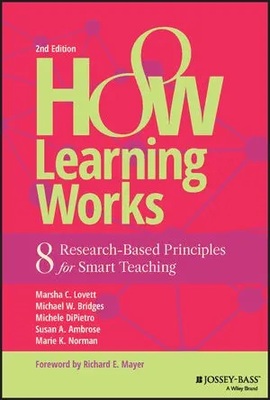
Spring 2024. How Learning Works: Eight Research-Based Principles for Smart Teaching
Marsha C. Lovett, Michael W. Bridges, Michele DiPietro, Susan A. Ambrose, and Marie K. Norman
As educators in the ever-evolving landscape of higher education, we are continuously challenged to keep our courses effective, engaging, relevant, and inclusive. The updated and expanded second edition of How Learning Works can help! It incorporates the latest research, provides a wider range of strategies, and adds a new principle to your toolkit.
-
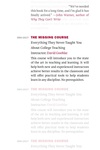
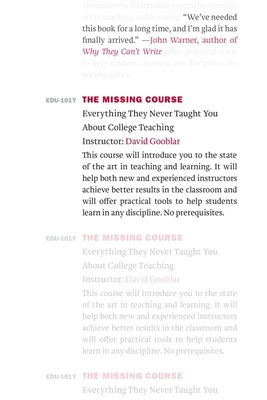
Fall 2023. The Missing Course: Everything They Never Taught You About College Teaching
David Gooblar
College is changing, but the way we train academics is not. Most professors are taught to be researchers first and teachers a distant second, even as scholars are increasingly expected to excel in the classroom. There has been a revolution in teaching and learning over the past generation, and we now have a whole new understanding of how the brain works and how students learn. The Missing Course offers a field guide to the state-of-the-art in teaching and learning and is packed with insights to help students learn in any discipline.
-
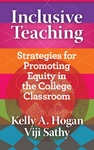
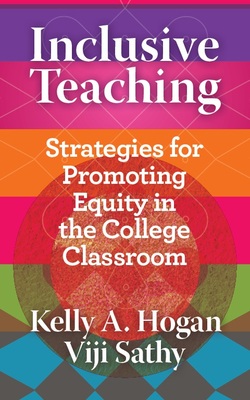
Spring 2023. Inclusive Teaching: Strategies for Promoting Equity in the College Classroom
Kelly A. Hogan and Viji Sathy
In a book written by and for college teachers, Kelly Hogan and Viji Sathy provide tips and advice on how to make all students feel welcome and included. They begin with a framework describing why explicit attention to structure enhances inclusiveness in both course design and interactions with and between students. Inclusive Teaching then provides practical ways to include more voices in a series of contexts: when giving instructions for group work and class activities, holding office hours, communicating with students, and more. The authors finish with an opportunity for the reader to reflect on what evidence to include in a teaching dossier that demonstrates inclusive practices. The work of two highly regarded specialists who have delivered over a hundred workshops on inclusive pedagogy and who contribute frequently to public conversations on the topic, Inclusive Teaching distills state-of-the-art guidance on addressing privilege and implicit bias in the college classroom. It seeks to provide a framework for individuals and communities to ask, Who is being left behind and what can teachers do to add more structure?
-
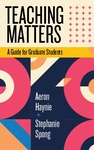
Fall 2022. Teaching Matters: A Guide for Graduate Students
Aeron Haynie and Stephanie Spong
In Teaching Matters: A Guide for Graduate Students, Aeron Haynie and Stephanie Spong argue that learning to teach well is an essential part of a graduate student's professional development—and they offer a guidebook that will help graduate students do just that. The book is informed by research but also grounded in the practical experiences of graduate TAs and instructors. No matter what your discipline or where you're at in your teaching journey, the book will provide the information you need to create meaningful learning experiences for the students in your classes.